
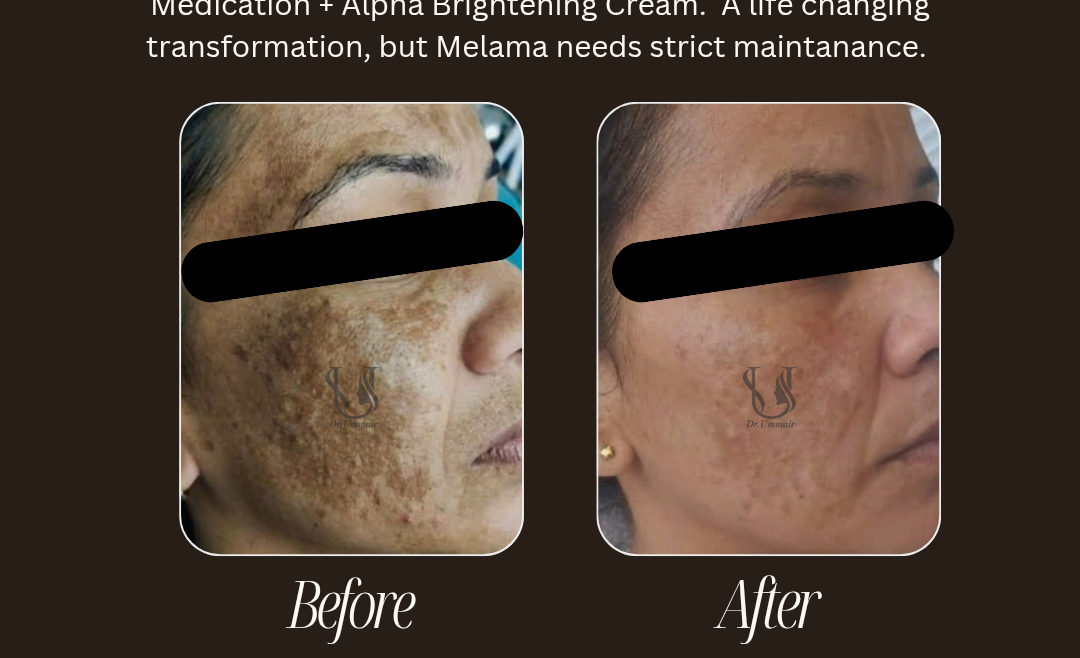
Understanding Melasma: A Patient’s Guide
What is Melasma? Melasma is a common skin condition characterized by the appearance of brown or greyish-brown patches, typically on the face. Often referred to as the “mask of pregnancy,” it most commonly affects the cheeks, bridge of the nose, forehead, chin, and upper lip.
It is not an infection or an allergy. It is a pigmentary disorder where your skin’s color-producing cells (melanocytes) become overactive. The primary triggers are Sun Exposure (UV rays), Hormonal Changes (pregnancy, birth control pills, thyroid issues), and Genetics.
Treatment Options
Treating melasma requires a multi-layered approach. There is no “magic wand,” but with the right combination, we can significantly fade the pigmentation.
1. Topical Treatments (Creams & Serums) This is often the first line of defense. We prescribe customized medical-grade creams that may include:
-
Skin Lightening Agents: Ingredients like Hydroquinone (the gold standard), Kojic Acid, or Arbutin to reduce pigment production.
-
Retinoids: To speed up cell turnover and fade dark spots.
-
Non-Steroidal Brighteners: Such as Azelaic Acid or Tranexamic Acid serum.
-
Sunscreen: This is non-negotiable. A broad-spectrum physical sunscreen (SPF 50+) must be applied every day, even indoors.
2. Oral Medications For stubborn cases, we may prescribe oral medications.
-
Oral Tranexamic Acid: A breakthrough treatment that helps reduce pigmentation from the inside out by calming the blood vessels and inflammation that trigger melasma.
-
Antioxidants: Supplements like Glutathione or Polypodium Leucotomos (oral sunscreen) to strengthen the skin’s resistance to UV damage.
3. Aesthetic Procedures In-clinic treatments can accelerate results when combined with home care:
-
Chemical Peels: Controlled exfoliation to lift the pigment from the upper layers of the skin.
-
Microneedling / Mesotherapy: Infusing lightening cocktails directly into the deeper layers of the skin.
-
Laser Therapy: Specific, low-energy lasers (like Q-Switched or Pico lasers) designed to break down pigment without heating the skin (which can sometimes make melasma worse).
Maintenance: Keeping It in Control
Melasma is a chronic condition, meaning it has a “memory.” Even after it clears, it can return instantly with unprotected sun exposure.
-
Strict Sun Protection: Wear a hat and sunglasses, and reapply sunscreen every 2-3 hours.
-
Heat Avoidance: Avoid saunas, steam rooms, and excessive heat from cooking, as heat alone can trigger flare-ups.
-
Maintenance Regimen: Once the dark patches fade, you will move to a “maintenance routine” with gentler products to keep the pigment cells calm long-term.